The attic sets the cooling bill before the air conditioner ever starts
In a Tomball summer the roof deck bakes the attic air long before the afternoon peak, and everything up there sits in it: the air handler, the plenum, and every foot of flex duct carrying cold air to the bedrooms. A supply duct that crosses a hot attic picks up heat on the way to the room, so the system has to run longer to deliver the same comfort. Insulation that has been walked on, matted down, or pushed aside by an earlier trade lets that heat leak through the ceiling into the rooms below.
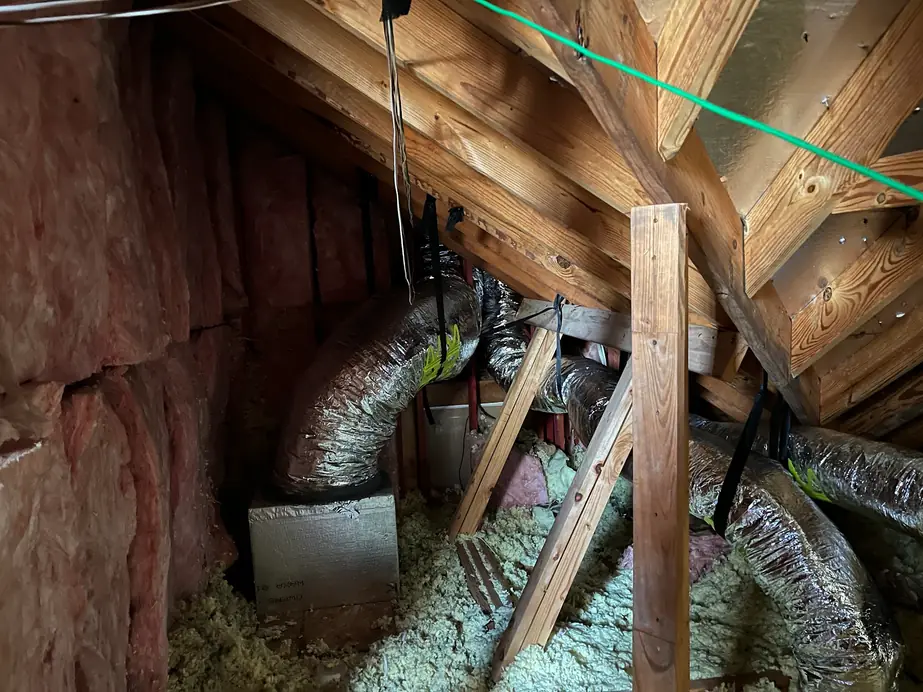
The photo on this page is a typical view: insulated flex duct running across blown-in attic insulation. The duct jacket, the collars where it meets the plenum, and the depth of the insulation underneath all matter, and any one of them can be the weak link. A torn jacket sweats and drips onto the ceiling. A loose collar leaks cold air into a space nobody lives in.
Crossway's own figure is that proper attic insulation can drop cooling and heating costs 20 to 30%. That is the company's published claim about a well-insulated attic, not a promise for any one house, which is why the job begins with looking at yours.
Insulation, ventilation and a solar attic fan, in the order they matter
The attic visit is an inspection first. The tech checks insulation depth and coverage across the whole floor, then looks for the things that undo it: soffit vents buried under insulation, a bath fan duct dumping moist air into the attic, gaps around the attic hatch, bare spots around the air handler platform, and duct jackets that have split. Attic insulation and ventilation go together, because a well-insulated attic that cannot breathe still traps heat under the roof.
Where the roof needs help moving air, Crossway installs a solar attic fan. Their own line for it: "Powered by the sun, this solar fan works to equalize the temperature in your home." It works hardest when the sun is hardest on the shingles, which is when the attic needs relief, and it runs without a wall circuit. It still needs intake air to pull from, so the soffit vents get checked and cleared first.
Because the same company installs and services the air conditioning, the attic gets treated as part of the system. The duct runs, the plenum and the air handler are looked at alongside the insulation, and where a transition or plenum needs to be built to fit an odd opening, the in-house sheet-metal shop in Tomball makes it instead of forcing a stock part into place.
After the work, here is what to watch for overhead
Once the attic is done, watch how the system behaves through the next heat wave. Rooms at the far end of the duct run should hold the thermostat setting more evenly, and the outdoor unit should not be running without a break all afternoon. If the house still lags, the next step is measuring airflow at the registers and refrigerant readings at the unit, the same digital iManifold readings used on every Crossway service call.
Call again if you see brown stains on a ceiling below a duct, insulation that has shifted or been disturbed after a roof leak or a visit from rodents, a duct that has come loose from its collar, or a solar attic fan that sits still on a bright afternoon. Any of those is a short visit when caught early.
The office is open 7:30 am to 5 pm at 832-250-6191, and members of the Preferred Service Agreement get reminders when seasonal inspections come due, which is a natural moment to have someone look up there.